How I Survived My Worst Investment Loss — And Tightened Control Before It Got Worse
Losing money in the market hits hard — I’ve been there. A few years ago, I watched helplessly as my portfolio dropped overnight. But instead of panicking, I shifted focus from chasing returns to cost control, the one thing I could actually manage. What followed wasn’t a quick fix, but a real strategy built on discipline, risk awareness, and smarter decisions. This is how I turned my financial setback into a long-term advantage — and how you can protect yourself when the next downturn hits.
The Wake-Up Call: When My Investments Blew Up
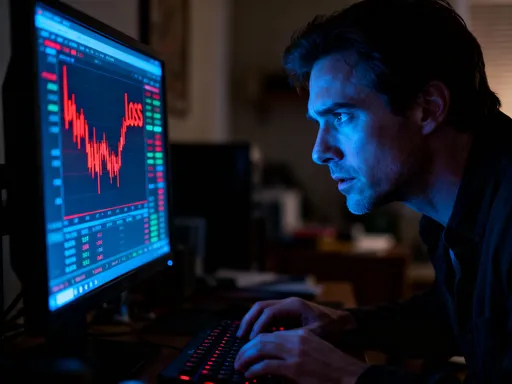
It started with a single decision — one that felt bold at the time but later revealed deep flaws in my approach. I had invested a significant portion of my savings into a sector that was trending strongly: renewable energy. The news was full of success stories, government incentives, and promises of exponential growth. Like many investors, I mistook momentum for stability. I poured money into individual stocks rather than diversified funds, ignored valuation metrics, and skipped due diligence, believing the upward trend would carry me through. Within months, the market sentiment shifted. Policy changes, supply chain issues, and overvaluation triggered a sharp correction. My portfolio, heavily concentrated in this one area, fell by nearly 40% in less than 90 days.
The emotional toll was just as severe as the financial one. I remember staring at my account balance one evening, trying to rationalize the loss. I told myself it was temporary, that I should hold on for the rebound. But deep down, I felt a growing sense of helplessness. I had no plan for what to do if things got worse. I hadn’t set stop-loss levels, defined exit strategies, or even calculated how much risk I was truly taking on. I had assumed that rising markets would protect me from making poor choices. That assumption was shattered. What made the experience even more painful was realizing that the loss wasn’t caused by an unpredictable global crisis — it was the result of avoidable mistakes: overconfidence, lack of diversification, and emotional decision-making.
This wasn’t a one-time market crash affecting everyone equally. Others with balanced portfolios barely felt the dip. Some even used the downturn to buy quality assets at lower prices. My pain was self-inflicted, not systemic. That realization was humbling. But it was also clarifying. I understood then that financial resilience isn’t about avoiding losses entirely — because no one can do that — but about how you respond when losses occur. The real test wasn’t the market’s behavior; it was mine. And in that moment, I decided to stop focusing solely on how to make more money and start asking how to lose less. That shift in mindset marked the beginning of a more disciplined, sustainable approach to investing.
Why Cost Control Is Your Best Defense in a Crisis
When markets fall, the instinct for many investors is to chase returns — to find the next big winner that will erase their losses. But in times of volatility, that impulse can be dangerous. What I learned from my own experience is that during a downturn, your most powerful tool isn’t prediction or timing; it’s cost control. While you can’t control market movements, interest rates, or economic cycles, you can control the expenses, behaviors, and risks within your own financial ecosystem. And when returns vanish — or turn negative — those controllable costs become the difference between temporary setbacks and long-term damage.
Think of your investment portfolio like a boat taking on water. During calm seas, speed matters. You want to move quickly, capture opportunities, and grow your wealth. But when a storm hits, speed becomes irrelevant. What matters is sealing the leaks, redistributing weight, and ensuring the vessel stays afloat. In financial terms, the leaks are high fees, unnecessary trades, poor diversification, and emotional reactions. If you’re losing money from multiple directions at once, even a market recovery may not be enough to bring you back to breakeven. That’s why cost control isn’t just about saving a few dollars here and there — it’s about preserving capital so you have the resources to recover when conditions improve.
Contrast this with the more common response: panic selling. Many investors, seeing red numbers, sell off positions at the worst possible time — locking in losses and missing the eventual rebound. Others try to ‘fix’ their portfolio by jumping into new, untested investments, hoping for a quick win. Both actions increase costs: the first through lost opportunity and potential tax implications, the second through transaction fees and higher risk exposure. Cost control, on the other hand, is a stabilizing force. It doesn’t promise immediate gains, but it reduces the drag on your portfolio, giving you breathing room to make thoughtful decisions. It shifts your focus from what you can’t control — the market — to what you can: your behavior, your strategy, and your discipline.
Spotting the Hidden Costs That Drain Your Portfolio
Most investors think of costs in simple terms: brokerage fees, mutual fund expense ratios, or advisory charges. But the real financial drain often comes from hidden, recurring expenses that go unnoticed until they’ve done significant damage. After my loss, I conducted a thorough audit of my investment activity over the previous two years. What I found surprised me. While my stated fees were moderate, the cumulative impact of small, frequent costs had eroded nearly 15% of my potential returns — a staggering amount over time. These weren’t one-time mistakes; they were patterns of behavior that quietly siphoned value from my portfolio.
One major source of waste was excessive trading. I had fallen into the trap of thinking that activity equaled progress. Every news headline, earnings report, or market fluctuation prompted me to adjust my holdings. Each trade came with a commission, even if it was small. More importantly, frequent buying and selling widened the bid-ask spread — the difference between what you pay to buy and what you receive when selling. Over dozens of trades, this gap added up. Worse, many of these moves were emotionally driven: fear, greed, or the desire to ‘do something’ when the market was quiet. I wasn’t improving my returns; I was increasing friction and reducing net performance.
Another hidden cost was poor diversification. By concentrating my investments in a single sector, I exposed myself to outsized risk without realizing it. When that sector declined, I had no offsetting gains elsewhere. Diversification isn’t free — it requires ongoing monitoring, rebalancing, and sometimes accepting lower short-term returns. But the cost of not diversifying is far greater: the risk of catastrophic loss. I also overlooked tax inefficiencies. Selling assets within a year of purchase triggered short-term capital gains taxes, which are significantly higher than long-term rates. These decisions, made in isolation, seemed minor. But together, they created a financial leak that accelerated my losses during the downturn.
The lesson was clear: awareness is the first step toward control. You can’t reduce what you don’t measure. Today, I track every transaction, review my portfolio’s cost structure quarterly, and ask one simple question before any trade: ‘Is this adding value, or just activity?’ That discipline has helped me eliminate wasteful spending and focus on what truly moves the needle: long-term compounding, risk-adjusted returns, and capital preservation.
Building a Personal Financial Fire Drill Plan
Just as families practice fire drills to prepare for emergencies, investors need a clear, actionable plan for financial crises. Without one, decisions are made in the heat of the moment — often driven by fear, misinformation, or impulse. After my loss, I realized I had no protocol for handling market stress. I was reacting, not responding. So I built a personal financial fire drill plan — a structured approach to managing downturns, designed to replace emotion with logic and chaos with clarity.
The foundation of this plan is a set of predefined thresholds. I established percentage-based triggers for portfolio review: if my total value drops by 10%, I initiate a full assessment. At 15%, I consider rebalancing or reducing exposure to high-risk assets. These aren’t automatic sell signals — they’re checkpoints to pause, evaluate, and decide based on data, not emotion. I also defined what constitutes a ‘crisis’ for me: not just market drops, but personal changes like job loss, medical expenses, or shifts in long-term goals. This ensures the plan covers both external shocks and internal pressures.
Next, I outlined a decision-making framework. It includes a checklist of questions to answer before making any change: What caused the decline? Is it temporary or structural? Do I still believe in the underlying assets? Have my goals changed? This process forces me to slow down and gather facts before acting. I also assigned roles — even though I manage my own investments. For example, I designate one day a week as ‘review day,’ where I assess performance, costs, and alignment with my strategy. In a crisis, I give myself a mandatory 48-hour cooling-off period before executing any trade. This simple rule has prevented numerous impulsive decisions.
Finally, I rehearse the plan. Every six months, I simulate a market downturn and walk through my response step by step. I review my checklist, update my thresholds, and reflect on past decisions. This mental preparation builds confidence and reduces anxiety. When a real crisis hits, I’m not starting from scratch — I’m following a familiar roadmap. A financial fire drill doesn’t guarantee profits, but it dramatically increases the odds of making sound choices when it matters most.
The Tools and Habits That Keep Costs in Check
Discipline is essential, but it’s easier to maintain when supported by the right tools and routines. After my wake-up call, I redesigned my entire investment process to minimize friction, reduce errors, and enforce consistency. I didn’t rely on willpower alone — I built systems that make good decisions the default choice.
One of the most effective changes was automating key tasks. I set up automatic rebalancing to ensure my portfolio stays aligned with my target asset allocation. Without this, I tended to let winners grow too large and let underperformers linger, increasing risk over time. Automation removes the need for constant monitoring and eliminates emotional interference. I also use scheduled portfolio reviews — quarterly, not daily — to assess performance, costs, and strategy fit. This prevents overreaction to short-term noise and keeps me focused on long-term objectives.
I switched to low-cost investment platforms that offer transparent fee structures and no hidden charges. While brand names aren’t important, the features are: clear pricing, educational resources, and tools for tracking expenses and performance. I also prioritize platforms that discourage frequent trading by not highlighting short-term gains or promoting speculative products. The environment matters — if your tools encourage activity, you’re more likely to engage in costly behavior.
On the behavioral side, I adopted several habits that act as guardrails. The 48-hour rule is one: no trade goes through without a two-day waiting period. This simple delay allows emotions to settle and gives me time to reconsider. I also keep a decision journal, where I record the rationale behind every investment move. Later, I review these entries to identify patterns — such as buying high out of excitement or selling low out of fear. This feedback loop has been invaluable for improving judgment. Lastly, I limit my financial news consumption. Constant updates amplify anxiety and create a false sense of urgency. I check reliable sources once a week, not multiple times a day. These tools and habits don’t make investing exciting — but they make it sustainable.
Risk Control vs. Return Chasing: A Mindset Shift
For years, I measured success by returns — how much money I made, how fast my portfolio grew, how it compared to others. That focus on performance created a dangerous bias: I celebrated gains but downplayed risks. I took credit for good outcomes without acknowledging the role of luck. And when losses came, I was unprepared. The turning point came when I realized that long-term financial health isn’t determined by peak returns, but by how well you survive the lows. That insight led to a fundamental mindset shift: from return chasing to risk control.
Return chasing is seductive. It’s fueled by stories of overnight millionaires, hot stocks, and market rallies. It promises quick rewards and social validation. But it’s also fragile. It depends on favorable conditions, perfect timing, and continuous luck — none of which are sustainable. Risk control, by contrast, is unglamorous but powerful. It doesn’t make headlines, but it builds resilience. It means accepting slower growth in exchange for greater stability. It means sleeping well at night, knowing your portfolio can withstand shocks. It means protecting what you’ve worked for, not gambling it on uncertain outcomes.
Historical market cycles show this clearly. In bull markets, return chasers often outperform — briefly. But in corrections, they suffer the deepest losses. Many never recover, either because they sell at the bottom or because their portfolios are too damaged to benefit from the rebound. Investors who prioritize risk control may lag during upswings, but they preserve capital, stay invested, and compound wealth steadily over time. My own journey reflects this pattern. Since adopting a risk-aware approach, my annual returns have been more modest — but my losses are smaller, my recovery faster, and my confidence stronger. I no longer measure success by how high I go, but by how well I hold on.
Turning Loss Into Long-Term Strength
That painful investment loss was one of the most difficult financial experiences of my life — but also one of the most valuable. It didn’t just cost me money; it cost me confidence, peace of mind, and trust in my own judgment. Yet from that low point emerged a clearer, more disciplined approach to money. I stopped seeing cost control as a constraint and began to view it as a form of empowerment. By focusing on what I could control — expenses, behavior, risk exposure — I regained a sense of agency in a world full of uncertainty.
The lessons I learned have become the foundation of my financial philosophy. I now understand that wealth isn’t built in moments of triumph, but in periods of restraint. It’s not about catching every upswing, but about surviving the downturns with your capital intact. I’ve learned to value consistency over volatility, sustainability over speed, and preparation over reaction. These principles have not only protected me from repeating past mistakes but have also improved my long-term results. My portfolio may not grow as fast as some, but it grows reliably — and that reliability is worth more than any short-term gain.
Most importantly, I’ve learned that financial resilience is a skill, not a trait. It’s not something you’re born with; it’s something you develop through experience, reflection, and deliberate practice. Every investor will face losses — it’s inevitable. But how you respond determines whether that loss becomes a setback or a stepping stone. By tightening control before the damage spreads, by building systems before the crisis hits, and by prioritizing protection over profit, you can turn even the worst investment mistakes into lasting strength. In the end, the most powerful investment you can make is in your own financial discipline.