Beyond the Daily Drive: How Voice-to-Text Quietly Transformed Our Commute Conversations
You know that moment—stuck in traffic, hands on the wheel, but your mind races with things you want to tell your partner? I did too—until voice-to-text changed everything. It didn’t just save time; it brought us closer. No more forgotten errands or misheard plans. Just real, seamless conversation woven into our commute. This isn’t about flashy tech. It’s about how a simple tool made our days smoother and our connection stronger. And if you’ve ever felt like your time in the car is slipping away—filled with silence, stress, or half-finished thoughts—then this is for you. Because what started as a tiny change in how we talk has quietly reshaped how we live, together.
The Commute That Almost Silenced Us
There was a time when the drive home felt less like a journey and more like a countdown—to exhaustion, to silence, to another evening where we barely spoke. We’d pull out of the office lot or school drop-off, both of us tired, and the car would fill with that heavy quiet. Not the peaceful kind. The kind that says, We’re together, but we’re not really here. We’d try to talk, but it always ended the same way: repeating ourselves, misunderstanding each other, or dropping the conversation altogether because one of us had to focus on the road.
Remember those arguments about dinner? “I thought you were picking up milk!” “No, I said I’d buy it tomorrow!” Little things, yes—but they piled up. And they didn’t just make us late to the grocery store. They made us late to each other. We were living parallel lives, connected by routine but not by rhythm. The car, which should have been a space to reconnect after a long day, became a place where we just… ran out of steam.
And it wasn’t just about miscommunication. It was about missed moments. The kind where you want to say, I saw the sunset and thought of you, but you don’t because you’re driving, and by the time you’re home, the feeling’s gone. Or when you remember an idea for a family weekend but forget it by the time you walk through the door. Our lives were full, but our connection was leaking out in the spaces between words.
Something had to give. We didn’t need a bigger vacation or a dramatic conversation. We needed a way to stay in sync—without adding more to our plates. What we didn’t realize was that the solution wasn’t in trying harder. It was in letting go—of the need to type, to wait, to get it perfect. It was in letting technology do the small things so we could focus on the big ones: being present, being kind, being together.
Discovering a Simpler Way to Stay in Sync
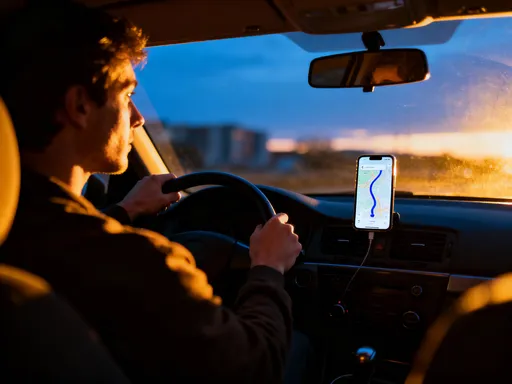
It happened by accident, really. I was stuck in traffic—again—behind a delivery truck that wasn’t in any hurry. My phone buzzed with a reminder: Dinner plans with partner. I sighed. I didn’t want to call and risk a distracted conversation, but I didn’t want to wait until I got home and forget everything. Then I remembered the voice message option in our messaging app. I tapped it, took a breath, and said, “Hey, can we do vegetarian tonight? I’ll grab the ingredients on my way.”
Seconds later, my phone chimed. “Perfect. I’ll set the table early.” That was it. No back-and-forth. No frustration. Just a clean, clear exchange. And something about it felt… different. It wasn’t just convenient. It felt more human. I hadn’t typed a single word. I’d used my voice—the way I naturally speak—with all its warmth and tone. And my partner didn’t just get the message. They got me.
That small moment sparked a shift. The next day, I sent another: “Meeting ran late—kiss the kids goodnight for me.” They replied with a voice note too: “Got it. Don’t worry. We’re all proud of you.” I nearly cried at a red light. Not because it was profound, but because it was real. No emojis, no rushed texts, no misinterpretations. Just care, delivered in a voice I’ve loved for years.
We started doing it more—little updates, sweet nothings, quick reminders. And slowly, the car became a place of connection again. Not because we were having deep talks every day, but because we were sharing the small things that make up a life. The tech didn’t replace conversation. It made room for it.
How Voice-to-Text Works Without Taking Over
Here’s the thing: you don’t need a new gadget or a tech degree to make this work. Voice-to-text is already on your phone. Whether you use an iPhone or an Android, it’s built right in—through Siri, Google Assistant, or the microphone button in your messaging apps. You don’t have to download anything. You don’t have to learn a new system. You just speak.
It’s as simple as this: open your messages, tap the microphone, and say what’s on your mind. Your phone listens—quietly, accurately—and turns your speech into text in seconds. If you prefer, you can send the voice note itself, so your loved one hears your tone, your laugh, that little pause when you’re thinking. The technology adapts to you. It doesn’t ask for perfection. It works with mumbled sentences, interrupted thoughts, and even background noise.
And here’s what I love most: it doesn’t take over your attention. Unlike texting, which pulls your eyes off the road and your mind out of the moment, voice-to-text lets you stay focused. Your hands stay on the wheel. Your eyes stay on the road. But your heart? It can stay connected. It’s not about multitasking. It’s about unifying—bringing communication into the flow of your day instead of fighting against it.
Some people worry it won’t understand them—accents, soft voices, kids yelling in the backseat. But modern voice recognition is smarter than we give it credit for. It learns your speech patterns. It filters out noise. And if it gets something wrong? You can edit the text before sending. It’s not magic. It’s just thoughtful design—technology that serves you, not the other way around.
Turning Minutes into Meaningful Moments
Our commutes haven’t gotten shorter. Traffic is still traffic. But what we do with that time has changed completely. Instead of scrolling through social media or zoning out to the radio, we use those 15, 20, sometimes 30 minutes to touch base. Not in a formal way. Not like a business update. But like two people who care about each other’s day.
I’ll say, “Saw those tulips you love at the market—buying them tomorrow,” and my partner will reply, “You’re my favorite person.” Or they’ll send, “Had a rough meeting, but your voice note made me smile,” and suddenly, my whole drive feels lighter. These aren’t grand declarations. They’re tiny emotional deposits—small acts of care that add up over time.
And it’s not just about romance. It’s about family. I’ve started sending voice notes to my kids, too. “Mommy’s on her way—get your pajamas ready!” Or “I’m so proud of how you shared today.” They light up when they hear my voice. Even my teenage daughter, who barely talks at dinner, will reply with a sweet, mumbled, “Love you, Mom.”
The commute didn’t change. But what it means did. It’s no longer dead time. It’s become a space for intimacy, for kindness, for staying woven into each other’s lives. And the best part? It costs nothing. No subscription. No special device. Just the phone you already have and the voice you’ve always used to say, “I love you.”
Building a Shared Rhythm, One Message at a Time
Before voice-to-text, our schedules felt like competing forces. Who’s picking up the kids? Who’s calling the vet? Who’s remembering the birthday gift? We’d try to coordinate over dinner, but by then, we were both tired, and the conversation would spiral into stress. Or we’d text back and forth, only to realize we’d missed a message in the clutter.
Now, it’s different. A quick voice note during the drive clears the air: “I’ll grab the dry cleaning—can you take the dog to the park?” Or “Can we push date night to Friday? I’ve got a work thing Thursday.” No drama. No tension. Just a smooth handoff, like passing a baton in a relay race.
What changed wasn’t just the tool. It was the tone. When you hear someone’s voice, you’re less likely to assume the worst. Text can feel cold. A voice carries warmth, patience, love. Even a simple, “I’m running late—traffic’s wild,” sounds different when you hear it. It’s not an excuse. It’s a shared moment.
Over time, we’ve built a rhythm. We don’t have to over-explain. We don’t have to keep score. We just stay in the loop. And that’s made us more patient, more generous, more together. We’re not just managing a household. We’re running a team—and voice-to-text is our quiet, constant teammate.
When Life Gets Loud, This Keeps Us Calm
Life doesn’t slow down. There are weeks when everything feels like too much—work deadlines, sick kids, car repairs, endless emails. In those moments, it’s easy to feel disconnected, even from the people we love most. You want to reach out, but you’re too tired to have a full conversation. You want to say, I’m here, but you don’t know how.
That’s when voice-to-text becomes a lifeline. A 10-second message—“Thinking of you,” “You’ve got this,” “I’m so proud of you”—can carry more weight than a long text. It’s not about the words. It’s about the voice behind them. It’s about knowing that, in the middle of chaos, someone took a breath and said your name.
I remember one week when my partner was preparing for a big presentation. They were stressed, quiet, pulling away. One evening, I sent a voice note: “I know this is hard. But I believe in you. Always.” They called me later and said, “I listened to that three times today. It got me through.”
That’s the power of this simple tool. It doesn’t solve problems. It doesn’t fix stress. But it creates a thread of care that runs through the day. It says, You’re not alone. And sometimes, that’s exactly what we need.
More Than Convenience—It’s Connection
Looking back, I realize we weren’t just looking for a way to remember the milk. We were looking for a way to stay close in a world that pulls us apart. Voice-to-text didn’t create our connection. But it protected it. It gave us a way to show up for each other—even when we couldn’t be in the same room.
We laugh more now. We assume good intent. We’re quicker to say, “I love you,” and slower to snap when things go wrong. The small messages we send during our drives have added up to something bigger: a deeper sense of partnership, of teamwork, of love that’s active, not passive.
And here’s the beautiful irony: a piece of technology—something we often blame for making us less human—has helped us be more human. It hasn’t replaced real talk. But it’s cleared the clutter so those real talks can happen. It’s turned our commutes from time lost into moments gained.
So if you’re sitting in traffic right now, feeling the weight of the day, wondering how to reconnect—try it. Tap that microphone. Say what’s in your heart. You don’t need perfect words. You just need your voice. Because sometimes, the most powerful thing we can offer each other isn’t a solution. It’s a reminder: I’m here. I see you. I’m with you. And that? That changes everything.