Worried about leaving your parents at home alone? Here’s how we stayed connected every day
You know that sinking feeling when you leave your aging parents at home and wonder, “What if something happens?” I did too—until we found a simple way to stay close, no matter the distance. It wasn’t about high-tech gadgets or complicated setups. It was about peace of mind, daily check-ins, and knowing help is just a tap away. This is how our family found calm in the chaos—using real, everyday tech that truly fits life.
The Moment Everything Changed
I remember the phone call—my mom had fallen in the kitchen. She was okay, but it hit me: we couldn’t keep living like this, hoping for the best while fearing the worst. I was two hours away, and in that moment, the distance felt unbearable. I kept asking myself, “Why didn’t I know sooner? Could I have helped if I’d known right away?” She didn’t want to worry me, so she waited until she was back on her feet to call. That silence, that gap between what happened and when I found out, was the turning point for our family.
After that day, I started researching ways to stay connected without crossing boundaries. I didn’t want to install cameras everywhere or make her feel like she was under constant watch. What I was looking for wasn’t surveillance—it was reassurance. Something that could quietly confirm she was up, moving around, making tea, answering the door. I wanted to support her independence, not take it away. And that’s when I discovered how modern, user-friendly technology could quietly wrap around our lives like a safety net—one she wouldn’t even notice was there.
The real breakthrough came when I shifted my thinking: this wasn’t about control. It was about care. It wasn’t about watching her every move—it was about knowing life was flowing as usual. And when it wasn’t, getting a gentle heads-up so I could reach out with love, not panic. That small shift in mindset made all the difference. Suddenly, the tools I found didn’t feel intrusive—they felt like love in action.
Living Alone Doesn’t Have to Mean Living in Fear
So many of us carry this quiet worry. You’re not alone if you check your phone every few hours, hoping to see a text from Mom or Dad. The fear isn’t always about a major emergency—sometimes it’s just the silence. No morning call. No reply to your “How are you?” message. That silence can feel louder than any alarm.
What if I told you there’s a way to ease that fear without making your parents feel watched? Modern home monitoring systems aren’t like the ones you see in movies. There are no flashing red lights or clunky wires. Instead, they’re made up of small, smart devices that blend into daily life—motion sensors tucked near the bedroom door, door sensors on the front entrance, even water leak detectors under the sink. They don’t record video or listen in. They simply send quiet signals to your phone when something is out of the ordinary.
For example, if your dad usually gets up around 7 a.m. and walks to the kitchen, a motion sensor can confirm that routine. If one morning he doesn’t move for a few hours past his usual time, you get a simple alert: “No activity detected.” That’s your cue to call. Not because something’s definitely wrong—but because it’s better to check with care than to wait in worry.
And here’s the beautiful part: these systems don’t replace phone calls or visits. They make them more meaningful. Instead of calling out of anxiety—“Are you okay? Did you fall?”—you can call with warmth: “Hey, I noticed you’re up early today—did you sleep well?” That small shift changes everything. It turns fear into connection.
Mornings Made Easier, with Just a Glance
Mornings used to be the hardest part of my day. I’d sit at my desk, sipping coffee, and wonder: Did Dad take his medication? Did Mom eat breakfast? Was the house warm enough? My mind would race before I even opened my laptop. But now, with a few simple tools in place, I start my day with calm instead of concern.
We added a small motion sensor near the medicine cabinet. It doesn’t track what she does inside—just that the door was opened. If she usually takes her pills at 8 a.m. and the sensor doesn’t trigger by 8:30, I get a gentle reminder. Not a red alert—just a soft nudge. Then I can text: “Hey Mom, did you grab your vitamins this morning?” It sounds small, but it’s huge. I’m not hovering. I’m just being a loving daughter.
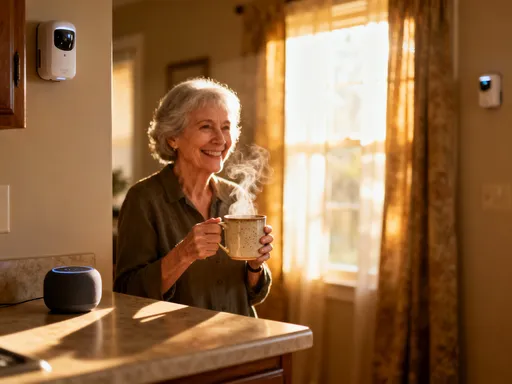
We also got a smart kettle. Yes, really. It might sound silly, but it logs when it’s been used. If she makes her morning tea, the app shows it. If not, I know something might be off. And again—that’s my cue to reach out, not with fear, but with care. “No tea today? Everything okay?” It’s not about tracking every detail. It’s about having peace of mind that the basics are covered.
These tools don’t take over her life—they support it. She still does everything herself. But now, I don’t have to call and interrupt her routine to check in. I can know she’s okay with just a glance at my phone. And that freedom—both for her and for me—is priceless.
When Memory Fades, Support Steps In
For some families, the challenge isn’t just aging—it’s memory loss. We’ve all heard stories: the stove left on, the front door opened at night, the same question asked over and over. It’s not about being careless. It’s about the brain changing, and that’s okay. What matters is how we respond—with patience, love, and the right support.
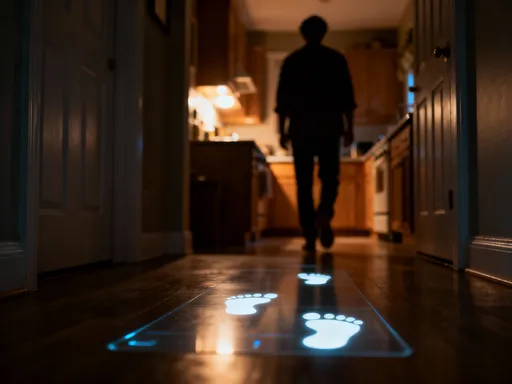
That’s where smart home tech becomes more than convenience—it becomes care. Motion sensors can detect unusual nighttime activity. If the kitchen light turns on at 2 a.m., and there’s movement near the stove, the system can send an alert. Not to scare anyone—but to give you time to act. You can call, or if you’re close, you can stop by. Small moments, big impact.
We also use automated reminders through a voice assistant. Every morning at 9 a.m., it says, “Time to take your morning medications.” She doesn’t have to rely on memory alone. The system is kind, consistent, and never judgmental. And if she forgets, I get a notification. Not because she failed—but because we’re a team.
One of the most powerful tools we added was a smart plug for the coffee maker. It turns on automatically in the morning and shuts off after 30 minutes. No risk of it being left on all day. And if she tries to turn it on again late at night—something out of her routine—the app lets me know. It’s not about control. It’s about creating a safe space where she can still live independently, with dignity and support.
Peace of Mind for Parents, Not Just for Kids
Here’s something I didn’t expect: my mom feels safer now. More independent, even. At first, I worried she’d feel watched or lose her sense of freedom. But the opposite happened. She knows that if she slips, or feels unwell, help is just a button press away. That confidence has given her the courage to live more fully.
We got her a small wearable—a pendant she wears around her neck. It has a button she can press if she needs help. No complicated steps. No phone to find. Just one touch, and I get an alert with her location. She jokes, “I’ve got my own personal bodyguard.” And honestly? She does.
But the real win is how it’s changed her mindset. Before, she’d downplay how she was feeling because she didn’t want to worry me. Now, she’s more likely to reach out, knowing I’ll respond with care, not panic. And if she doesn’t, the system gently reminds me to check in. It’s not about replacing her voice—it’s about making sure her voice is heard, even when she’s quiet.
She also uses a voice assistant to set her own reminders: “Call my sister at 2 p.m.” or “Water the plants at noon.” She feels in control. And that’s the goal—not to take over, but to empower. Technology isn’t making her dependent. It’s helping her stay independent, longer.
Setting It Up Without the Stress
I know what you’re thinking: “This sounds great, but I’m not tech-savvy. How do I even start?” I felt the same way. But here’s the truth: you don’t need to be an expert. In fact, the best systems are the ones that are simple, reliable, and easy to use—especially for your parents.
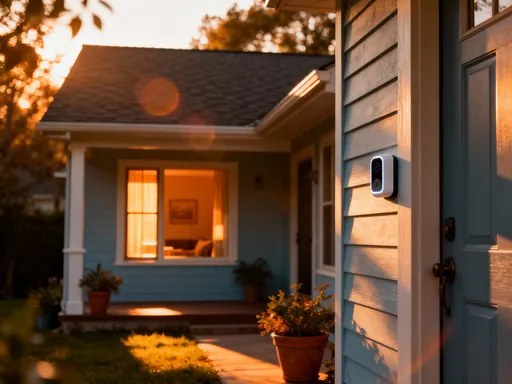
Start small. That’s my biggest piece of advice. Pick one thing that would make the biggest difference. Maybe it’s a smart speaker so you can check in with a quick voice message. Or a motion sensor in the hallway to confirm morning movement. Or a door sensor on the front door to know when she leaves or returns. One device. One step.
Choose systems that work with your phone and send clear, simple alerts. Look for ones with apps that are easy to read—large text, clear icons. And most importantly, involve your parents in the process. Don’t just show up and install things. Sit down together. Say, “I’ve been worried, and I found a few tools that might help us both feel better. What do you think?” Listen to their concerns. Respect their space.
We started with a smart speaker. I showed her how she could say, “Hey, remind me to take my pills at 10 a.m.” and it would do it. She loved that. Then we added a motion sensor. Then the wearable button. Each step felt natural, not forced. And because she was part of the decision, she embraced it. This isn’t about installing surveillance. It’s about building trust—one device, one conversation, one moment at a time.
More Than Devices—It’s About Connection
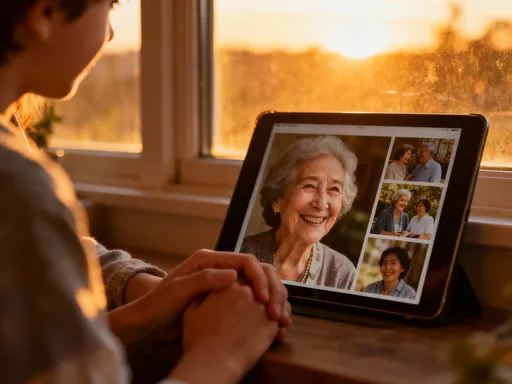
At the end of the day, it’s not the sensors or alerts that changed our lives. It’s the closeness we’ve regained. I don’t worry as much. I don’t call out of fear. And she doesn’t feel alone. We’ve built a rhythm—morning pings, shared reminders, voice messages that say, “Thinking of you.”
Technology didn’t replace our bond. It strengthened it. Because now, we’re not just reacting to crises—we’re sharing in the small, beautiful moments of daily life. I know when she makes tea. She knows I check in. And that quiet understanding—that we’re looking out for each other—has brought us closer than ever.
Peace of mind doesn’t come from perfect systems or zero risks. It comes from presence. From knowing you’re not alone. From having simple, thoughtful tools that help you care—without taking over.
If you’re sitting there, staring at your phone, wondering if your parent is okay, I want you to know: there’s another way. You can love without worrying. You can support without controlling. You can give them freedom—and yourself peace. It starts with one small step. One device. One conversation. And it ends with something priceless: connection, care, and the quiet confidence that no matter the distance, you’re still close.