Tested Smart Floors for 6 Months: The One Security Feature That Finally Gave Me Peace of Mind
You know that moment when you’re lying in bed, wondering if you locked the back door? I’ve been there—more times than I’d like to admit. After six months of living with a smart floor system, one unexpected feature changed everything. It’s not about flashy lights or voice commands. It’s the quiet, constant awareness of who’s moving through my home—and when. This isn’t just tech. It’s the feeling of safety I didn’t know I was missing. And honestly? It’s become the most comforting part of my day, especially when the house is quiet and everyone’s asleep. I used to check the locks three times. Now, I just breathe. Because I know.
The Night That Made Me Rethink Home Security
I’ll never forget that Thursday night. The house was dark, the kids were in bed, and I was winding down with a book when I heard it—soft footsteps in the hallway. My heart jumped. I froze, listening. No one should be up. I grabbed my phone, opened the security app, and checked the camera feed. Nothing. Just shadows. But the sound was real. I called out, 'Who’s there?' Silence. Then—'Mom? It’s me, Jake.' My 16-year-old had come in late from a friend’s house and didn’t want to wake anyone. He’d used the side door, which we sometimes forget to lock.
That moment hit me harder than it should have. I wasn’t angry at Jake. I was shaken. Because for a full minute, I truly believed someone was in my home. And the worst part? Our old security system didn’t catch it. The motion sensor didn’t trigger—maybe because he moved slowly, or the angle was off. The cameras showed nothing useful. I realized then that what I had wasn’t really security. It was just equipment. I needed something smarter—something that could tell the difference between a family member coming home late and a stranger trying the back door. That night, I started researching. Not for flashy gadgets, but for peace. And that’s how I found smart floor technology.
Why I Chose a Smart Floor Over Traditional Alarms
Let’s be honest—most home security systems feel like a compromise. Cameras watch every corner, but they make me uneasy. Do I really want a lens pointing down the hallway all night? What about when the kids are running around in pajamas? And motion sensors? Mine went off every time the cat jumped on the couch or a shadow passed by the window. False alarms became a joke in our house. 'Oh, the sensor’s just saying hello again,' my daughter would say.
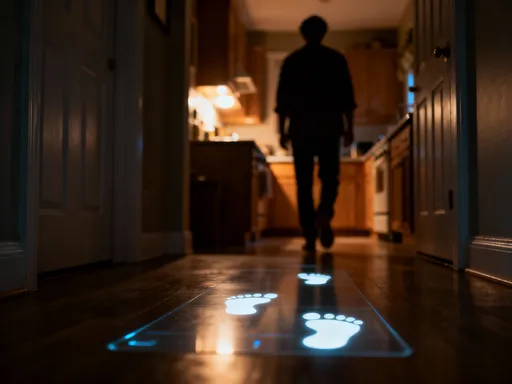
So when I read about smart floors—tiles or mats embedded with pressure and motion sensors that detect not just movement, but weight, step rhythm, and location—I was intrigued. No cameras. No blinking lights. Just a floor that knows who’s walking on it. It works under rugs, in total darkness, and doesn’t need charging. It’s always on, always aware. I liked that it was invisible—no wires, no boxes, nothing to remind me I was being 'monitored.' It just blends into the home.
What sold me was how it learns. Instead of reacting to any motion, it builds a profile of each person’s walking pattern—their 'gait,' as the experts call it. Over time, it can tell if it’s me, my husband, one of the kids, or even the dog. That kind of precision felt like a game-changer. I wasn’t looking for a fortress. I wanted a home that could recognize its people. And this? This felt like something that could actually understand us.
The First Week: Learning How It Learns Me
Setting it up was easier than I expected. The company sent a rollable smart floor mat—kind of like a high-tech yoga mat, but thinner and more flexible. We installed it in the main hallway, the kitchen entrance, and the master bedroom doorway. No drilling, no wiring. Just peel, place, and connect to the app via Wi-Fi. The tech support team walked me through it in less than 15 minutes.
But here’s what they don’t tell you in the ads: the first few days feel… underwhelming. The system doesn’t know you yet. It doesn’t know your stride, your pace, how you shuffle in the morning or tiptoe when you’re trying not to wake anyone. So the app asked us to 'train' it. Every morning, each of us walked the same path—down the hall, into the kitchen, back to the bedroom—so it could record our steps. We did this for about a week. My kids thought it was hilarious. 'Look, Mom’s teaching the floor who we are!' they’d laugh.
But slowly, it started to work. The app began showing little icons—'Sarah detected,' 'Jake entering kitchen,' 'Luna (our dog) moving to living room.' It wasn’t perfect. One night, it confused me with my husband because I was wearing his slippers. But the more we walked, the smarter it got. And that’s when I realized—this isn’t magic. It’s math. It’s data. But it’s also kind of beautiful. A floor that learns your family’s rhythm? That’s not just tech. That’s care.
The Security Feature That Surprised Me: Step Pattern Recognition
I’ll admit, I bought the smart floor for security. I wanted to know if someone was in the house when they shouldn’t be. But what I didn’t expect was how comforting it would be to know who was moving—and why.
The real game-changer is step pattern recognition. The system doesn’t just say 'motion detected.' It analyzes the pressure, timing, and sequence of each step. Everyone walks differently. My daughter has a quick, light step. My husband’s is heavier, more even. I tend to drag my foot slightly when I’m tired. The system notices these things. And after a few weeks, it could identify us with over 95% accuracy—according to the app’s dashboard.
One night, my 10-year-old woke up with a fever. She kept getting up for water, walking to the bathroom, pacing her room. Normally, I’d have no idea until I checked on her. But that night, the app gently lit up: 'Emma moving—frequent nighttime activity.' Not an alarm. Just a quiet notification. I got up, gave her medicine, and sat with her. No panic. No guesswork. Just knowing.
Then there was the day it flagged an 'unrecognized gait' during afternoon hours. I was on a work call, but the alert buzzed my phone. I opened the app—no family member was home. I checked the live feed (yes, there’s a camera option, but only for verification, not constant recording) and saw a stranger near the side door. I called a neighbor, who came over and asked the person what they were doing. Turned out to be a lost delivery driver, but still—it wasn’t someone who should have been near our home. The system didn’t just detect motion. It knew the step pattern didn’t belong. And that made all the difference.
Real-Life Moments: When the System Truly Protected Us
It was a Tuesday afternoon. I was on a Zoom meeting with my team, headphones on, fully focused. My youngest was at soccer practice, the older two at school, and my husband at work. The house was empty. Or so I thought.
Then my phone vibrated. A soft chime—'Unusual movement near basement access.' I paused the call, opened the app, and saw the alert: 'Unknown gait detected. Low confidence match.' My stomach dropped. I checked the timeline—no one had entered through the front or side doors. But the basement door is at the back, away from the main cameras. I couldn’t see it clearly.
I didn’t panic. Instead, I used the app to activate the hallway light remotely—just to see if someone would react. A few seconds later, the motion stopped. Then started again. I called my neighbor, who lives three doors down. 'Can you please check my back yard?' I asked. She did—and found a man trying the basement door handle. He said he was 'checking for a friend,' but he had no business being there. She told him to leave, and he did.
Later, the police said it matched a pattern in the neighborhood—someone testing doors to see which ones were unlocked. No one had been hurt. No one had gotten in. But it could have been different. That moment proved it: this system isn’t about catching criminals after the fact. It’s about stopping something before it happens. It gave me not just data, but power. The power to act. And that? That’s priceless.
How It Changed Our Daily Life—Beyond Security
If I only talked about safety, I’d be selling it short. The smart floor has quietly improved so much more than just our security. It’s changed the rhythm of our days.
Now, when I get up at 3 a.m. for a glass of water, the kitchen lights come on—softly, just enough to see. Not blinding. Not startling. Just there. The system knows it’s me, knows my routine, and responds gently. I don’t fumble for switches. I don’t wake the kids. It’s like the house is looking out for me.
When someone walks into the living room, the thermostat adjusts—warming it in winter, cooling it in summer. It’s not huge, but over time, it’s saved on energy bills and made the house feel more comfortable. My mom, who visits every few weeks, especially loves it. She has mild balance issues, and we’ve set up a fall detection alert. If the system senses a sudden drop in movement—like a fall—it sends a notification to my phone and my sister’s. It’s not 100% foolproof, but it’s a layer of care we didn’t have before.
And here’s the unexpected part: it’s brought us closer. My kids now talk about 'teaching the floor' new habits. When Jake started taking piano lessons, he walked differently—more lightly, more carefully. The system noticed. 'New gait detected,' the app said. We laughed. But it showed me how much this little piece of tech was paying attention—not just to protect us, but to understand us. It’s not cold. It’s not robotic. It feels… present.
What I Wish I Knew Before Starting
If you’re thinking about trying a smart floor system, I’ll be real with you: it’s not instant. It takes time. The first two weeks were the hardest. The system misidentified people, sent too many alerts, and once even thought the dog was me because he walked the same path after I did. (Yes, Luna has her own 'step profile' now. She’s surprisingly consistent.)
What helped? Walking the same routes every day during setup. Involving the whole family. Even the dog. We made it a game. 'Let’s teach the floor who we are!' And privacy? I was nervous at first. Who has access to this data? Is someone watching? But the company uses end-to-end encryption, and all data stays on a local hub in my home. Nothing goes to the cloud unless I choose to back it up. And I haven’t. I feel better knowing it’s just here, in my house, not on some server somewhere.
My biggest tip? Be patient. Don’t expect perfection on day one. Trust the learning process. And talk to your family about it—make it a team effort. The more the system knows, the better it works. And the payoff? A home that doesn’t just respond to you, but knows you. That remembers how you walk when you’re tired, how your child skips down the hall when they’re happy, how your pet circles before lying down. It’s not just security. It’s memory. It’s love, in a way.
More Than a Floor—It’s Quiet Confidence
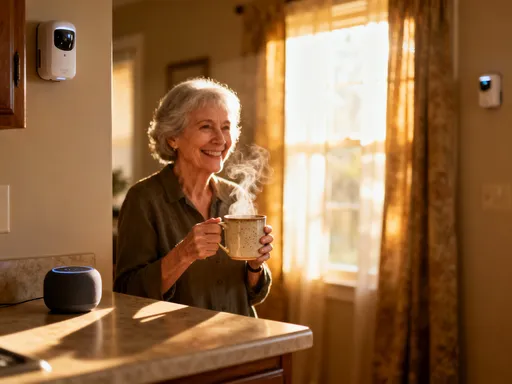
Six months in, I don’t think about the smart floor anymore. I don’t check the app constantly. I don’t worry about false alarms. It’s just… part of the house. Like the walls, the windows, the way the sunlight hits the kitchen in the morning. It’s normal. And that’s the highest praise I can give it.
It didn’t change the structure of my home. But it changed how I live in it. I feel calmer. More present. Less anxious about the little things—like whether the door is locked or if someone’s downstairs. I trust the system. Not blindly, but because I’ve seen it work. I’ve lived it.
And maybe that’s the real magic of technology—not when it dazzles us, but when it disappears. When it stops being a gadget and starts being a part of life. The smart floor isn’t about fear. It’s about freedom. Freedom to relax, to sleep deeply, to live without that low hum of worry in the back of your mind.
So if you’re like I was—checking locks, jumping at shadows, wondering if you’re really safe—I get it. And I’ll say this: try something that listens. Something that learns. Something that stands guard without making you feel like you’re in a bunker. Because peace of mind isn’t found in loud alarms or flashing lights. It’s in the quiet certainty that your home knows you. And has your back. Always.