Fixed my sleep in 3 weeks using VR—here’s how it quietly changed my days
Ever feel like no matter how early you crawl into bed, you still wake up exhausted? I did. For months, I tossed and turned, chasing sleep like it was a lost habit. Then I tried something unexpected: a virtual reality app designed not for gaming, but for guiding my body and mind into better rhythms. It didn’t promise miracles—just small, daily nudges. And slowly, my sleep deepened, my mornings brightened, and my focus sharpened. This isn’t about futuristic tech—it’s about real life, and how one simple tool helped me reclaim it.
The Sleep Struggle That Felt Impossible to Break
Let’s be honest—how many of us have been there? You’re exhausted by 9 p.m., but the moment your head hits the pillow, your brain kicks into overdrive. Thoughts about tomorrow’s to-do list, that awkward thing you said at dinner, or the never-ending pile of laundry suddenly feel urgent. I used to lie there, staring at the ceiling, wondering why rest felt like such a luxury. I’d check my phone—bad move—and then the blue light would only make it worse. The cycle continued: late nights, groggy mornings, and too much coffee just to feel halfway human.
I thought this was just part of being an adult, especially as a mom juggling work, family, and the constant hum of responsibilities. But when I started snapping at my kids over tiny things and zoning out during important meetings, I knew something had to change. I tried the usual fixes—sleep trackers that told me I was restless, magnesium supplements, lavender sprays, warm baths, even journaling. Some helped a little, but nothing stuck. The real issue wasn’t just falling asleep. It was that my body had forgotten how to transition into rest. My nervous system was stuck in ‘on’ mode, and no amount of chamomile tea was going to override that.
What I needed wasn’t another gadget to measure my sleep—it was a way to gently guide my mind and body into a rhythm. I didn’t need data. I needed a ritual. Something that said, ‘It’s okay to slow down now.’ And that’s when I stumbled on something I never expected: virtual reality.
Discovering Virtual Reality as a Daily Reset Button
I’ll admit it—I used to think VR was just for teenagers with gaming headsets and sci-fi lovers. The idea of strapping on a bulky device before bed sounded more stressful than relaxing. But a friend mentioned she’d been using a VR app every night to unwind. Not for gaming. Not for watching movies. But for something much simpler: calming her mind.
She described it as a ‘digital forest walk’—soft lighting, gentle sounds of water and birds, and a slow, guided breathing rhythm that matched the visuals. It wasn’t flashy. It didn’t try to entertain. It just created space for stillness. I was skeptical, but desperate enough to try. I borrowed my son’s VR headset (after promising not to break it) and downloaded the app he recommended.
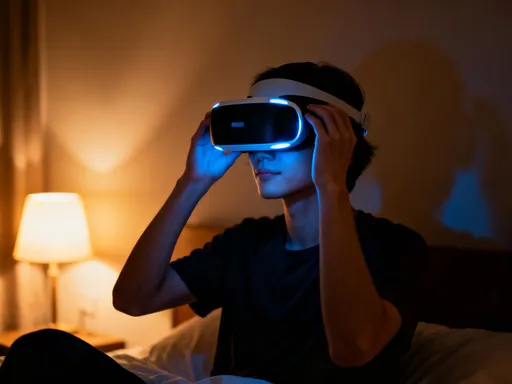
The first time, I sat on the edge of my bed, feeling a little silly. I put on the headset, and suddenly, I wasn’t in my bedroom anymore. I was standing on a quiet path under a twilight sky, surrounded by tall trees. A soft voice invited me to breathe in for four counts, hold for four, and exhale slowly. The air shimmered slightly with each breath. A stream trickled nearby. There were no notifications, no demands, no screens glowing in the dark. Just peace.
I only did ten minutes that night, but something shifted. I didn’t fall asleep instantly when I took the headset off, but my mind wasn’t racing. For the first time in weeks, I felt… calm. Not sleepy yet, but ready for sleep. It was like my brain had finally gotten the memo: ‘We can rest now.’
How VR Guides Your Body Into a Better Rhythm
Here’s what surprised me most: it wasn’t just about distraction. I’ve tried meditation apps before, and while they helped sometimes, I’d often get bored or distracted. With VR, the experience was immersive. It didn’t just ask me to focus—it made it easy. By filling my entire field of vision with calming scenes and guiding my breath with visual cues, it engaged my senses in a way that felt natural, not forced.
Our bodies respond to signals. Bright light tells us it’s time to be awake. Noise keeps us alert. But VR did the opposite. It blocked out the real-world stimuli that keep us keyed up—like the glow of the TV or the sound of traffic outside. Instead, it gave my brain a new set of signals: soft light, slow movement, rhythmic breathing. Over time, my body began to recognize this pattern. Just like how a bedtime story signals to a child that it’s time to sleep, my VR session became a cue that rest was coming.
The science behind this makes sense. Our circadian rhythm—the internal clock that regulates sleep and wakefulness—responds to environmental cues like light and routine. When those cues are inconsistent, our rhythm gets disrupted. But when we create a consistent pre-sleep ritual, especially one that engages multiple senses, we help our body reset. VR, in this case, wasn’t replacing biology. It was supporting it. It became a bridge between the chaos of the day and the quiet of the night.
And the best part? It didn’t require willpower. I didn’t have to ‘try’ to relax. The experience did the work for me. I wasn’t fighting my thoughts—I was gently guided away from them. After a few nights, I found myself looking forward to it. It wasn’t a chore. It was a gift I gave myself.
Waking Up Different—And What Changed in My Days
The first real sign that something had shifted came on a Tuesday morning. I woke up before my alarm—no jolt, no panic, just a slow, natural awareness that it was time to rise. I sat up, and instead of reaching for my phone or groaning at the day ahead, I actually felt… okay. Not just okay—clear. Present. Like I’d truly rested.
That morning, I made breakfast without rushing. I listened when my daughter told me about her dream. I got to work on time, and instead of needing three cups of coffee to focus, I felt alert. My energy stayed steady through the morning. No crash by 2 p.m. No brain fog during my team call. Tasks that used to feel overwhelming now felt manageable. I even had the mental space to plan dinner without stress.
My partner noticed the change before I did. ‘You seem lighter,’ he said one evening. ‘Less tense.’ And he was right. I wasn’t snapping over small things. I wasn’t carrying the weight of the day like a backpack I couldn’t put down. My sleep wasn’t just better—my whole life felt more balanced.
It wasn’t overnight. The first week, I still had restless nights. But by week two, the rhythm started to lock in. I was falling asleep faster, staying asleep longer, and waking up more refreshed. It wasn’t about sleeping more hours—it was about the quality of those hours. My sleep became deeper, more restorative. And that made all the difference in how I showed up in the world.
Making It Work: How to Build Your Own VR Wind-Down Routine
The real shift happened when I stopped treating it as an experiment and started treating it as a habit. I set a daily reminder on my phone for 8:30 p.m.—30 minutes before my target bedtime. I kept the VR headset on my nightstand, right next to my book. At first, it felt a little awkward, like I was doing something too techy for a bedtime ritual. But after a few days, it became as normal as brushing my teeth.
I learned a few things along the way. First, I chose scenes that felt peaceful, not exciting. One night, I tried a ‘stargazing on a mountain’ experience, and while it was beautiful, it felt too stimulating. My mind started wandering to travel plans and bucket lists. So I switched back to the forest path and the quiet beach—scenes with gentle movement and soft sounds. The goal wasn’t entertainment. It was calm.
Second, I didn’t pressure myself to do a full 20 minutes every night. Some days, I only had five. But even that helped. The key was consistency, not perfection. On busy nights, I’d tell myself, ‘Just five minutes. Just breathe.’ And those five minutes often turned into ten, and sometimes even twenty, because once I started, I didn’t want to stop.
I also made a rule: no screens after VR. Once the session ended, I put the headset away, brushed my teeth, and got into bed. No checking email. No scrolling. That final stretch of darkness, without blue light, helped seal the deal. My body knew the routine: VR = wind down = sleep. And the more I repeated it, the stronger the signal became.
Beyond Sleep: Unexpected Benefits That Stuck With Me
I didn’t expect the benefits to go beyond better sleep. But over time, I noticed other shifts. I felt more present during conversations. I actually listened when my son told me about his day, instead of half-watching while folding laundry. I noticed the details—the way the light hit the trees on my walk, the sound of rain on the roof, the warmth of my coffee cup in my hands.
It was like the VR sessions had trained me to be more mindful. Not in a forced, ‘I must meditate’ way, but in a natural, gentle way. Those ten minutes of stillness had started to spill into the rest of my day. I was less reactive. When something stressful happened—a missed deadline, a family conflict—I didn’t spiral as quickly. I could pause. Breathe. Respond instead of react.
My stress levels dropped. Not because my life got easier—because I got better at handling it. I wasn’t ignoring my emotions. I was making space for them. The VR experience had become a form of self-care that didn’t require hours or expensive retreats. It was simple. It was accessible. And it reminded me that taking care of myself wasn’t selfish—it was necessary.
Even my creativity came back. I started journaling again. I baked on weekends just for fun. I felt like myself again—more grounded, more connected, more alive. And it all started with a few quiet minutes each night, guiding my breath in a virtual forest.
Why This Isn’t a Gimmick—And How It Can Help You Too
I know what you might be thinking. ‘VR? Really? Isn’t that just another tech trend?’ I thought the same. But this isn’t about flashy gadgets or futuristic promises. It’s about using technology in a way that serves us—not distracts us. It’s not replacing human connection or nature. It’s not a cure for sleep disorders or a substitute for medical care. But for people like me—people who are tired, overwhelmed, and just need a little help finding their rhythm—it can be a powerful tool.
What made it work wasn’t the tech itself. It was the consistency, the sensory cues, and the intention behind it. It gave me a way to slow down in a world that never stops. It didn’t demand anything from me. It just offered a space to rest.
If you’re tired of feeling tired, if you’re ready to stop chasing sleep and start reclaiming your days, I encourage you to try it. You don’t need the most expensive headset. You don’t need hours. Just ten minutes. Just once. Try a calming VR experience before bed. Let it guide your breath. Let it quiet your mind.
And if, like me, you wake up one morning feeling truly rested—if you notice you’re more patient, more focused, more like yourself—then you’ll understand. This isn’t about escaping reality. It’s about coming back to it. One quiet night at a time.